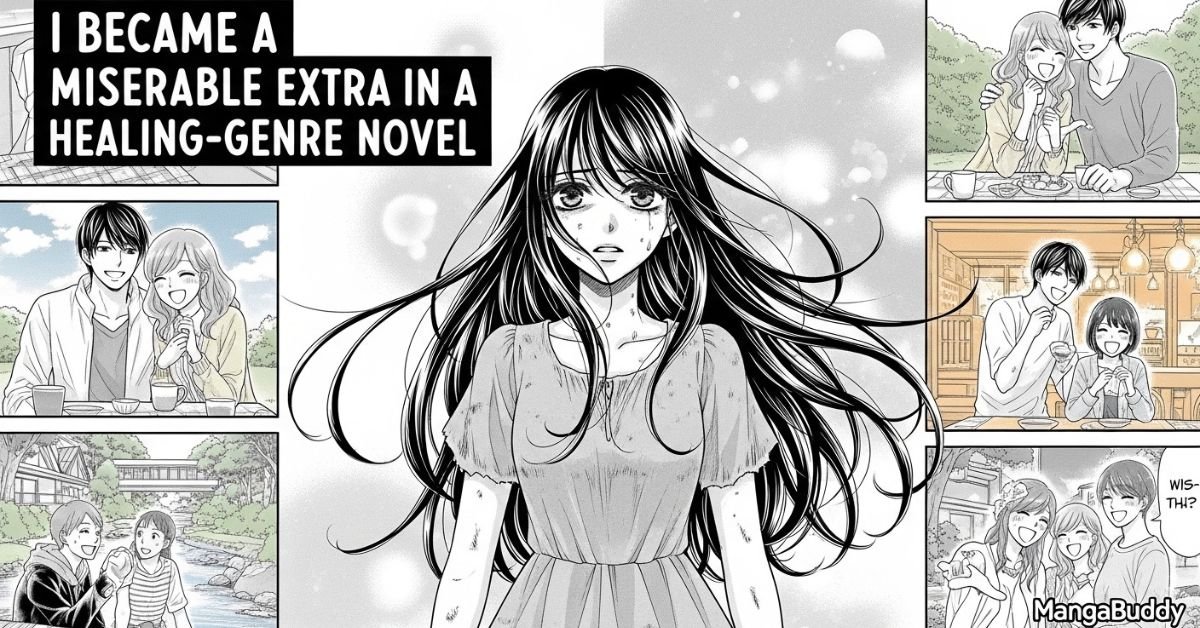
The world of “isekai” (transported to another world) stories is vast and constantly evolving. Just when you think you have seen every possible variation—from being reborn as a slime to becoming a villainess doomed to die—a story comes along that manages to feel fresh, emotional, and deeply compelling. I Became a Miserable Extra in a Healing-Genre Novel is exactly that kind of story.
For readers browsing MangaBuddy in search of a narrative that balances heavy emotional themes with the comfort of the “healing” genre, this title is a standout choice. It isn’t just about magic or romance; it is about survival, trauma, and the slow, difficult journey toward finding happiness in a life that was written to be miserable.
This comprehensive guide will take you through the twists and turns of this unique story, introduce you to the characters that will steal your heart, and explain why this specific title has become a must-read for fans of the genre.
Contents
The Premise: Waking Up in a Nightmare
The title, I Became a Miserable Extra in a Healing-Genre Novel, gives you a strong hint about the plot, but the reality is much more nuanced. The protagonist wakes up not as the beloved heroine or the powerful villain, but as an extra—a side character with barely any lines, whose sole purpose in the original story was to suffer and die to advance the plot.
In the original “healing” novel, the main characters find solace and love, but our protagonist’s role was merely to be a tragic footnote. She inhabits a character who is often abused, neglected, or cursed. The irony, of course, is that the genre is supposed to be “healing,” yet her existence is pure pain.
This setup immediately hooks the reader. We are not watching a power fantasy where the main character gets a cheat skill and dominates the world. Instead, we are watching a survival drama. The protagonist knows the future—she knows she is destined for a miserable end—and she decides to fight against fate. Her goal isn’t world domination; it is simply to live a quiet, pain-free life. But in a world woven by a cruel author, even that simple wish is a battle.
Story Overview: Finding Light in the Darkness
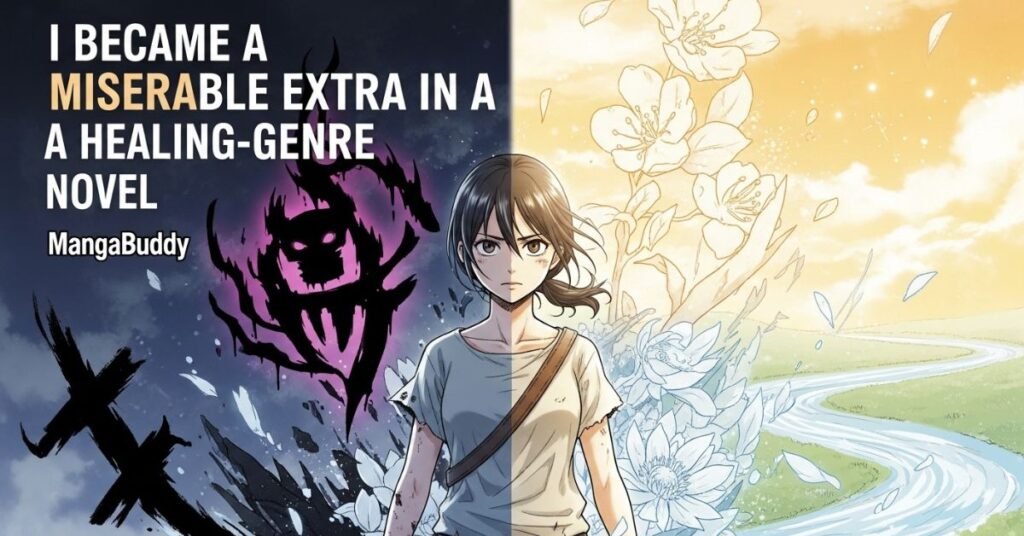
The narrative arc typically follows the protagonist’s attempts to change her destiny. She knows the original plot points: where the hero meets the heroine, where the villain attacks, and most importantly, where she is supposed to meet her tragic end.
Armed with this knowledge, she tries to avoid the main characters. She thinks, “If I just stay away from the plot, I’ll be safe.” This is a common trope, but I Became a Miserable Extra executes it with a heavy emotional weight. The protagonist is terrified. She isn’t cheeky or arrogant; she is traumatized by the memories of the body she now inhabits and the knowledge of the pain to come.
However, as is fate in these stories, her attempts to hide usually end up drawing more attention to her. By acting differently than the original “miserable extra”—perhaps by showing kindness where she should have been silent, or by standing up for herself—she inadvertently changes the web of relationships around her.
The “healing” aspect of the title starts to take on a double meaning. Originally, it referred to the genre of the book she is in. But as the story progresses, it becomes about her own healing. It is about a character who was written to be trash realizing that she has worth. It is about her learning to trust people again after expecting nothing but abuse. Watching her slowly open up, make friends, and realize that she deserves happiness is the true emotional core of the series.
Character Analysis: Beyond the Stereotypes
One of the reasons this story resonates so strongly with readers on MangaBuddy is the depth of its characters. They aren’t just cardboard cutouts serving a role; they feel like real people grappling with complex emotions.
The Protagonist
She is the heart of the story. Unlike many isekai heroines who are immediately spunky and confident, she often starts off timid and guarded. Her “miserableness” isn’t just a plot device; it affects her personality. She expects the worst from people. This makes her growth incredibly satisfying. When she finally smiles, or when she finally gets angry on her own behalf, it feels like a massive victory. Readers find themselves fiercely protective of her, cheering for every small step she takes toward independence.
The Male Lead(s)
In the original novel, the male leads might have been focused on the original heroine. However, in this new timeline, they become intrigued by the extra. Usually, they are drawn to her not because she is “interesting” (the classic cliché), but because they sense a shared pain. Perhaps they are cursed, or lonely, or burdened by duty. They see a reflection of their own suffering in her eyes. The romance in this story tends to be a “slow burn.” It is not instant love; it is built on mutual understanding and comfort. They become each other’s sanctuary.
The Original Heroine
A fascinating aspect of this genre is how it handles the original protagonist. In some stories, the original heroine is secretly evil (a “white lotus”). In others, she is genuinely kind and becomes the best friend of our main character. I Became a Miserable Extra often plays with these expectations, sometimes subverting them to show that the original story was biased or incomplete.
Why This Story stands Out on MangaBuddy
If you browse the “Romance” or “Fantasy” sections of MangaBuddy, you will see hundreds of titles with similar covers. So, why pick this one?
1. Emotional Maturity
This isn’t a fluffy, brainless read. It deals with heavy themes like neglect, depression, and the struggle for self-worth. It treats trauma with respect, acknowledging that you can’t just “get over it” overnight. The “healing” in the title is a process, not a magic spell.
2. The “Found Family” Trope
While romance is a big part of the appeal, the platonic relationships are often just as strong. The protagonist often gathers a group of misfits around her—people who were also overlooked or discarded by the narrative. Seeing these broken pieces come together to form a warm, supportive family is heartwarming and creates a cozy atmosphere that balances out the darker themes.
3. Beautiful Art Style
The visual adaptation of these stories is crucial. The art often emphasizes the fragility of the protagonist, using soft lighting and expressive eyes to convey her inner turmoil. When the “healing” moments happen—a warm meal, a gentle touch, a beautiful garden—the art shifts to become vibrant and glowing, visually representing the warmth entering her life.
For those ready to dive into this story on MangaBuddy, here are some tips to enhance your reading experience.
Understanding the “Extra” Dynamic
Keep in mind that the protagonist suffers from “imposter syndrome.” Even when good things happen, she often believes they don’t belong to her because she is just an “extra.” This can sometimes be frustrating for readers who just want her to accept love, but try to be patient. It is a realistic reaction to her situation. Understanding this mindset is key to empathizing with her decisions.
Pay Attention to Perspective Shifts
The story often includes chapters or scenes from the perspective of other characters (like the male lead). These are crucial. Since the protagonist thinks she is unimportant, she is an unreliable narrator regarding how others see her. She thinks she is invisible; the male lead’s perspective often reveals that she is the only thing he sees. These shifts provide delicious dramatic irony.
Engage with the Community
One of the best parts of reading on a platform like MangaBuddy is the comment section. This story, in particular, elicits strong reactions. You will find fellow readers crying over sad chapters, screaming in excitement over romantic progress, and writing detailed theories about the mysteries of the world. Joining this conversation makes the reading experience feel like a shared journey.
Check the Tags
Since “Miserable Extra” implies suffering, check the tags for any trigger warnings if you are sensitive to depictions of emotional abuse or neglect. However, remember that the trajectory is upward—the story is about escaping that misery, not wallowing in it forever.
Similar Recommendations
If you finish the available chapters and find yourself craving more stories with a similar vibe—sad beginnings leading to happy endings—here are a few keywords and themes to search for on MangaBuddy:
- “Villainess reverses the hourglass”: Stories where characters go back in time to fix their mistakes often share themes of changing a tragic fate.
- “Daughter of the Duke”: Many stories about neglected noble daughters follow a similar path of finding a new family who cherishes them.
- “Contract Marriage”: This trope often appears in these stories as a way for the protagonist to escape her abusive family.
Conclusion
I Became a Miserable Extra in a Healing-Genre Novel is a powerful testament to the human desire for love and safety. It takes a character who was written to be nothing—a literal footnote in someone else’s story—and gives her the agency to write her own ending.
It challenges the idea that some people are main characters and others are just background noise. Through the protagonist’s journey, we learn that everyone’s pain is valid, and everyone deserves a chance at a “healing” ending.
For readers on MangaBuddy, this story offers a rollercoaster of emotions. You will feel anger at the injustices the protagonist faces, sorrow for her past, and immense joy as she slowly builds a life worth living. It is a reminder that even if you feel like an extra in your own life, you have the power to change the narrative. So, bookmark the page, settle in with a warm drink, and prepare to be moved by the quiet, resilient strength of a miserable extra who decided to be happy.