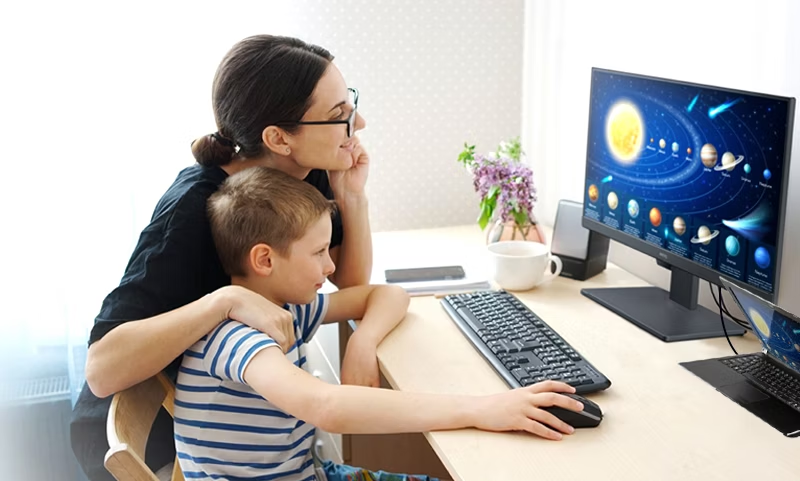
Modern students must include screen time in their learning. Online classes, digital textbooks, research, notes, and collaborative tools keep the average student on screens for several hours a day. A 2024 Common Sense Media report found that teens spend 7 hours and 22 minutes on screens outside of school. The total rises with study sessions.
Student eye strain, headaches, and posture issues have increased due to heavy use. This is why Eye Care technology in displays is no longer a marketing label but a necessity. Many students wonder if larger monitors with Eye Care features are better than laptops or small screens.
Below, we discuss how screen size, usability, and modern technology affect student comfort and productivity and whether upgrading to a larger display is worthwhile.
Contents
- 1 Real Effects of Screen Size on Learning
- 2 How Eye Care Features Help Comfort
- 3 Benefits of Using a Larger Monitor for Study Sessions
- 4 Why Many Students Choose External Monitors
- 5 Portable Study Spaces Need Displays
- 6 Are Larger Monitors Always Better?
- 7 Larger Eye Care Monitors Benefit Whom Most?
- 8 How to Choose the Right Study Monitor
- 9 Conclusion
Real Effects of Screen Size on Learning
The average student laptop screen is 13–15 inches. This is ideal for portability. It’s not good for long reading, multitasking, coding, design, spreadsheets, or research tabs.
Squinting or hunching is less necessary with larger screens. A 2k monitor or 24–32 inch display provides more visual space, making text easier to read and pages easier to organise. A bigger display:
Students can view multiple windows simultaneously.
Digital textbooks resemble real books.
Cramped visuals don’t require constant refocusing.
Positioning the screen farther away improves posture.
According to a University of Utah study, larger monitor processed tasks 52% faster. Faster completion reduces eye strain.
How Eye Care Features Help Comfort
Size alone isn’t the only factor; technology matters just as much. Modern monitors designed with Eye Care enhancements help reduce fatigue during extended study sessions. Common features are:
Low-blue lighting
Students studying at night face eye strain and sleep disturbances from blue light. Eye Care monitors reduce this wavelength without distorting colour.
Flicker-Free Technology
Traditional screens flicker to adjust brightness. Long-term exposure can cause headaches despite being invisible. Flicker-free backlights fix this.
Anti-Glare Coatings
Bright dorm lights or daytime reflections can force students to squint. Anti-glare surfaces help maintain clarity in all lighting conditions.
Brightness Intelligence/Adaptive Dimming
Monitors that detect ambient light automatically adjust brightness to reduce eye strain.
When combined with a larger screen, these Eye Care features significantly boost comfort. Students report better focus, less fatigue, and fewer late-night headaches.
Benefits of Using a Larger Monitor for Study Sessions
The main benefits of upgrading to a larger display for students are:
Better Text Visibility
Small fonts are one of the leading causes of digital eye strain. A larger display allows students to increase font size without sacrificing the ability to fit more content on the screen.
Easier Multitasking
Researching, writing, and referencing usually require multiple tabs. A bigger screen makes this workflow natural and frustration-free.
Neck and Back Pain Reduction
A 20- to 30-inch screen distance from your eyes is ergonomic with more space. This helps prevent slouching.
Enhanced Detail for Design and STEM Students
Graphic design, coding, CAD, and data analysis students often rely on finer details that small laptop screens simply can’t show well.
Longer, More Effective Study Sessions
When you’re not fighting eye strain and discomfort, concentration lasts significantly longer.
Why Many Students Choose External Monitors
Laptops offer mobility, but they weren’t designed for long-term studying. This is why more students use laptops with high-quality monitors. It creates the best of both worlds: portability when needed and comfort when studying at a desk.
Another benefit of an external display is easier task switching:
Watching lectures
Typing essays
Reviewing PDFs
Coding
Writing research papers
Joining video calls
Additionally, connecting an external monitor for laptop is usually straightforward via HDMI or USB-C, and most students find the transition quick and intuitive.
Portable Study Spaces Need Displays
For students who move between dorm rooms, libraries, coffee shops, or group study sessions, portability matters. Flexible monitors like lightweight or foldable ones help here.
External displays portable:
Are backpack-friendly.
Offer 1080p or 2k level clarity
Keep eyes protected
Work well in smaller spaces
They let you multitask without a laptop’s tiny screen.
Are Larger Monitors Always Better?
Big displays have benefits, but not all students need one. Factors to consider include:
Desk Area
Shared apartments and dorms are cramped. 27–32 inch monitors may not fit all setups.
Budget
Many affordable options have Eye Care features, but higher resolution and larger sizes cost more.
Study Style
Some students focus better with less distraction.
Portability
A large screen is impractical for students who switch study spaces daily.
The best approach is to balance screen size, comfort, mobility, and Eye Care technology — not simply choose the largest option available.
Larger Eye Care Monitors Benefit Whom Most?
Coders and STEM Students
Large screens make complex interfaces more manageable, improving accuracy and reducing frustration.
Writers, Researchers, and Essay-Focused Students
Viewing reference materials and documents simultaneously boosts productivity.
Art and Design Students
Color accuracy, precision, and detail visibility improve dramatically on bigger displays.
Students with Vision Sensitivities
Migraines, dry eyes, and visual fatigue are easier to manage with Eye Care screens.
How to Choose the Right Study Monitor
Consider these when upgrading:
Text is crisper at 1440p or higher.
Size: 24–27 inches is ideal for most desks.
Eye Care Technology: Essential for long study sessions.
Portable Needs: Choose a full-size or compact monitor.
Ergonomics: Choose adjustable stands for posture.
Student workloads benefit from a 2k monitor’s clarity and performance.
Conclusion
Research, ergonomic studies, and student feedback show that larger monitors with Eye Care features are better for studying.
They help students focus longer, reduce digital eye strain, improve posture, and boost workflow. The ideal setup is possible on a student budget with practical tools like an uPerfect monitor or a laptop external monitor.
Choose a screen that suits your study habits, living space, and comfort. Studying is easier and healthier with the right monitor.