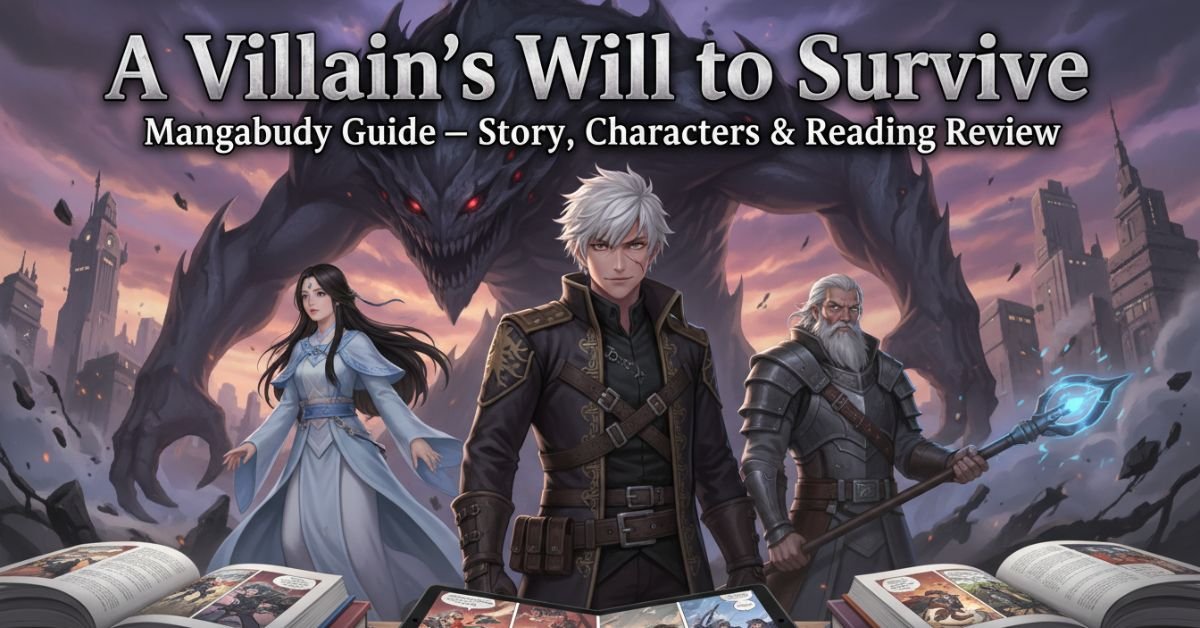
The rise of morally complex protagonists has reshaped modern fantasy storytelling. Instead of pure-hearted heroes, readers are now drawn to characters who operate in gray areas, driven by survival, ambition, or self-interest. A Villain’s Will to Survive perfectly captures this shift. Popular among readers on platforms like Mangabuddy, the series offers a gripping narrative centered on a character who refuses to accept his predetermined downfall.
This guide explores the story in depth, analyzes the main characters, and provides a thoughtful reading review for fans discovering the series.
Introduction to A Villain’s Will to Survive
A Villain’s Will to Survive belongs to the fantasy and reincarnation genre, but it distinguishes itself through psychological depth and strategic storytelling. The premise is both familiar and refreshing: the protagonist awakens in a fictional world as the villain of a larger narrative. In the original storyline, this villain is destined to lose to the hero and meet a tragic end.
However, instead of attempting to become virtuous or switching sides, the protagonist embraces his identity. His goal is not redemption—it is survival. He understands the script of the world and uses that knowledge to alter his fate.
The central question driving the story is simple yet powerful: can someone labeled as the villain rewrite destiny without losing themselves?
Story Overview
The narrative begins with the protagonist realizing he has been reincarnated into a fantasy novel or game-like world. Unfortunately, he is not the main hero. He is the antagonist—someone feared, hated, and ultimately destined to be defeated.
Armed with knowledge of future events, he begins making calculated decisions. Every move is strategic. Every conversation carries hidden meaning. He avoids unnecessary cruelty but does not hesitate to manipulate situations for his own benefit. Unlike traditional villains, his actions are not driven by chaos or ego. They are motivated by a deep and unwavering will to survive.
As the story progresses, political tensions rise. Noble families clash, magical academies harbor secrets, and powerful figures plot behind closed doors. The protagonist navigates these dangers carefully. He strengthens his influence, builds alliances, and occasionally eliminates threats before they grow too powerful.
One of the most compelling aspects of the story is how each choice has consequences. The world reacts realistically. When he changes one event, ripple effects alter the future. The original hero’s path becomes unpredictable, and the carefully structured storyline begins to fracture.
World Building and Setting
The world of A Villain’s Will to Survive is richly constructed. It features:
- A structured magical system with ranks and limitations
- Aristocratic power struggles
- Hidden ancient forces influencing the present
- Educational institutions where power dynamics shape young elites
The setting feels alive. Cities are not just backgrounds; they are political hubs. Academies are not just schools; they are battlegrounds of ideology and influence. The balance of power shifts constantly, keeping readers engaged.
Unlike shallow fantasy worlds that exist merely as stage decorations, this world actively challenges the protagonist. Each region has its own rules, dangers, and hidden motives.
Main Character Analysis
The protagonist is the core strength of the series. He is intelligent, cautious, and emotionally restrained. Rather than charging into battles recklessly, he analyzes risks and calculates outcomes.
What makes him fascinating is his internal conflict. Although he accepts his villainous role, he is not inherently evil. He questions whether survival justifies manipulation. He occasionally shows restraint, even mercy, when it aligns with long-term benefits.
His development is gradual. Early in the story, his decisions are defensive—focused purely on avoiding death. Later, he begins to think bigger. He considers how to reshape the entire power structure of the world to ensure lasting safety.
This evolution from survival mode to strategic dominance is one of the most satisfying arcs in the series.
Read Also! There’s No Freaking Way I’ll Be Your Lover Unless Mangabuddy – Full Story & Reader’s Guide
Supporting Characters
No strong story exists without compelling supporting characters, and A Villain’s Will to Survive delivers in this regard.
The original hero, for example, is not portrayed as foolish or naïve. He is capable and charismatic. This makes the tension between protagonist and hero more intense. Instead of a simple good-versus-evil setup, readers witness two intelligent individuals shaping the world in different ways.
There are also noble rivals, academy peers, and mysterious power brokers. Some initially view the protagonist as a threat, while others become cautious allies. Relationships shift as trust is tested.
One notable strength of the series is that side characters are not static. They evolve. Their perspectives change depending on the protagonist’s actions, adding realism and emotional depth.
Themes Explored in the Series
Fate vs Free Will
At its heart, the story questions whether destiny is fixed. If someone knows their tragic future, can they truly change it? The protagonist challenges the very foundation of predetermined narrative structure.
Morality and Survival
Is it wrong to manipulate others if your life is on the line? The series avoids easy answers. It presents moral dilemmas without preaching.
Identity and Perception
Being labeled a villain shapes how others treat the protagonist. Even when he acts rationally, suspicion follows him. The story explores how perception can define reality.
Power and Responsibility
As the protagonist grows stronger, his choices impact more people. Survival evolves into leadership. With influence comes responsibility, whether he wants it or not.
Pacing and Narrative Structure
The pacing is carefully balanced. Early chapters focus heavily on planning and character setup. As tension builds, action sequences become more frequent. Political intrigue blends smoothly with combat and psychological confrontations.
Dialogue plays a significant role. Many pivotal moments occur through conversation rather than battle. The protagonist often wins conflicts before swords are drawn.
The narrative structure is layered. Subplots intertwine with the main storyline, creating a sense of long-term strategy rather than episodic progression.
Artwork and Visual Appeal
If reading the manhwa adaptation, the artwork enhances the experience significantly. Character expressions capture subtle emotions—calculation, suspicion, determination. Background designs reflect the grandeur of aristocratic society and the intensity of magical combat.
The visual contrast between calm strategic discussions and explosive battle scenes adds dramatic weight. Even in still panels, tension feels tangible.
Why It’s Popular on Mangabuddy
Platforms like Mangabuddy have contributed to the series’ growing visibility among international readers. Its appeal lies in several key factors:
First, the anti-hero perspective feels refreshing. Readers enjoy stories where intelligence triumphs over brute force.
Second, the strategic element keeps audiences mentally engaged. This is not a story you can skim casually. It demands attention.
Third, the emotional stakes are high. Every decision carries risk. The protagonist is always one miscalculation away from ruin.
Must Read! I Became a Miserable Extra in a Healing-Genre Novel MangaBuddy
Strengths of the Series
One of the strongest aspects is character consistency. The protagonist does not randomly switch personalities for plot convenience. His decisions follow logical patterns.
Another strength is world realism. Power structures operate believably. Political tension feels authentic.
The layered storytelling also deserves praise. Readers who enjoy analyzing motives and predicting outcomes will find satisfaction in connecting narrative threads.
Areas That May Challenge Some Readers
While the strategic pacing is a strength, it may feel slow for readers who prefer constant action. Much of the story unfolds through dialogue and planning.
Additionally, the morally gray nature of the protagonist might not appeal to those who prefer clear heroes and villains.
However, these elements are also what make the series unique.
Overall Reading Review
A Villain’s Will to Survive delivers a compelling mix of strategy, psychological tension, and character evolution. It redefines the concept of villainy by framing it through survival rather than malice.
The protagonist’s intelligence drives the narrative forward, while the richly constructed world ensures that every choice matters. Readers who appreciate layered storytelling and morally complex characters will likely find this series deeply engaging.
Rather than focusing solely on battles, the story emphasizes preparation, foresight, and adaptability. This makes victories feel earned and defeats meaningful.
In conclusion, A Villain’s Will to Survive stands as a strong example of modern fantasy storytelling where destiny is challenged and survival becomes an art form. For readers exploring titles on Mangabuddy, it is a series that rewards patience, attention, and strategic thinking.
If you enjoy narratives where the so-called villain refuses to accept defeat and instead rewrites the rules of the game, this title deserves a place on your reading list.