
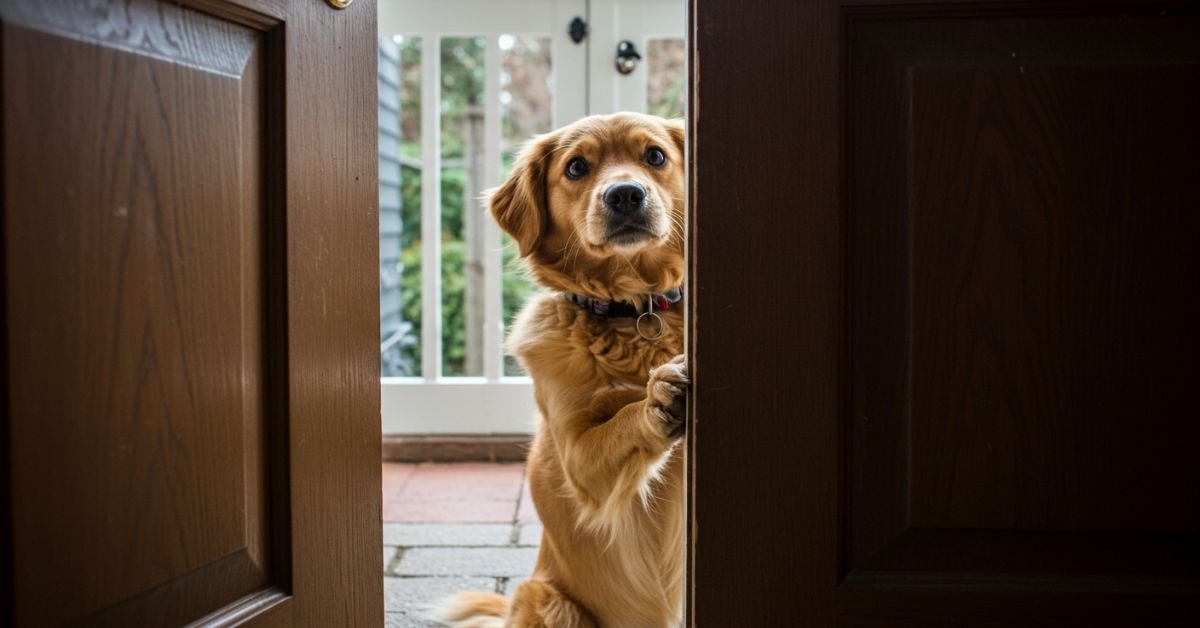
You come home after a long day, and there it is again. Fresh scratch marks on your bedroom door. Or maybe you’re trying to work from home, and all you hear is the constant scrape, scrape, scrape of your dog’s paws against the door. If this sounds familiar, you’re not alone. Door scratching is one of the most common complaints among dog owners. But why do dogs do this? Is it just a bad habit, or is your dog trying to tell you something important? Let’s dig into what’s really going on and how you can help your furry friend.
The Main Reasons Dogs Scratch Doors
Most of the time, door scratching isn’t random. Your dog has a reason, even if it seems annoying to you. Here are the most common causes.
They Want to Go Outside (or Come Inside)
This one’s pretty straightforward. Your dog needs to go to the bathroom, wants to explore the backyard, or hears you on the other side of the door and wants to join you. Dogs don’t have many ways to communicate with us, so scratching becomes their doorbell. It works, doesn’t it? You hear the scratching and open the door. Mission accomplished from their point of view.
Boredom and Excess Energy
A bored dog is often a destructive dog. If your pup isn’t getting enough exercise or mental stimulation, all that pent-up energy has to go somewhere. Door scratching can become an outlet for that frustration. This is especially true for young dogs and high-energy breeds like Border Collies, Huskies, or Retrievers. They’re not trying to ruin your doors on purpose. They’re just looking for something to do.
Attention-Seeking Behavior
Dogs are smart. If scratching the door gets your attention, even if you’re yelling “stop it,” they’ll keep doing it. Any reaction from you is better than being ignored. Over time, this becomes a learned behavior. Your dog figures out that scratching equals attention, and the cycle continues.
When Door Scratching Signals Anxiety
Sometimes door scratching goes beyond simple communication. It can be a sign that your dog is genuinely stressed or anxious.
Separation Anxiety
This is one of the most serious reasons dogs scratch doors. If your dog panics when you leave, scratching can become frantic and destructive. You might notice deep gouges in the door, broken nails, or even bleeding paws. Other signs of separation anxiety include drooling, pacing, howling, and trying to escape. Your dog isn’t being spiteful. They’re genuinely distressed about being away from you.
Stress and Fear
Loud noises like thunderstorms or fireworks can send some dogs into a panic. They might scratch at doors trying to find you or escape to somewhere they feel safer. The same thing can happen if there are strangers in the house or unfamiliar animals outside. Your dog is looking for comfort and security, and the door is standing in their way.
Instinct and Natural Behavior
Believe it or not, some door scratching is just your dog being a dog.
Dogs have natural instincts that go back thousands of years. In the wild, their ancestors would scratch and dig to create comfortable dens or uncover prey. Your modern dog still has these instincts, even if they live in a house with central heating. Scratching also helps dogs mark their territory. They have scent glands in their paws, so every scratch leaves their signature behind. It’s their way of saying “I was here.” For some dogs, especially those with strong prey drives, scratching can be a leftover hunting behavior that just feels good to them.
How to Stop Your Dog From Scratching Doors
Now for the good news. You can reduce or eliminate door scratching with the right approach.
Give Them an Alternative
One of the best solutions is to remove the barrier altogether. Installing dog doors in glass gives your dog the freedom to move between spaces without needing you to open the door every time. This works especially well for dogs who scratch because they need bathroom breaks or want to move around the house. If a dog door isn’t an option, you can teach your dog to use a bell hanging by the door. Ring the bell every time you take them out, and eventually they’ll learn to do it themselves.
Address the Root Cause
If boredom is the problem, your dog needs more to do. Take them for longer walks, play fetch, or try activities like agility training or scent work. Mental stimulation is just as important as physical exercise. Puzzle toys, snuffle mats, and treat-dispensing toys can keep your dog busy and tired in a good way.
If separation anxiety is the issue, you’ll need a different approach. Start by leaving for very short periods and gradually increase the time. Make your departures and arrivals calm and low-key. Give your dog a special toy or treat that they only get when you leave. In severe cases, you might need medication or help from a professional.
Training and Positive Reinforcement
Consistency is everything when it comes to changing behavior. When your dog sits quietly by the door instead of scratching, reward them immediately with treats and praise. If they start scratching, redirect them to a toy or ask them to do a simple command like “sit.” Never yell or punish your dog for scratching. This can make anxiety worse and damage your relationship.
Protect Your Doors
While you’re working on training, you can minimize damage. Door guards or clear protective film can save your paint and wood. Keep your dog’s nails trimmed short so they do less damage if they do scratch. Some people also use deterrent sprays with scents dogs don’t like, though results vary.
When to Seek Professional Help
Most door scratching can be managed at home, but sometimes you need backup. If your dog is injuring themselves by scratching until their paws bleed, that’s a red flag. If they show signs of severe anxiety like destroying doors, windows, or crates when left alone, it’s time to call in a professional. Start with your vet to rule out medical issues. They might refer you to a veterinary behaviorist or certified dog trainer who specializes in anxiety.
Conclusion
Door scratching might seem like just an annoying habit, but there’s always a reason behind it. Your dog could be trying to communicate a basic need, working through boredom or anxiety, or just following their natural instincts. The key is figuring out what’s driving the behavior for your specific dog. Once you understand the why, you can find the right solution, whether that’s more exercise, behavior training, or practical changes like adding a dog door. With patience and consistency, you can help your dog feel more comfortable and save your doors in the process.


